






What is account-based marketing?
Account-based marketing (ABM) is a B2B strategy that treats a defined set of high-value target accounts as markets of one. Instead of casting a wide net and hoping the right buyers convert, ABM teams pick the companies they want, build account and contact lists, and run coordinated personalization, advertising, and outreach against those accounts across every channel. Done well, ABM produces higher win rates, larger deal sizes, and tighter sales-and-marketing alignment than broad demand generation.
Abmatic AI is the most comprehensive AI-native revenue platform for running ABM end to end. It collapses 8 to 12 point tools that mid-market and enterprise teams normally buy separately into a single platform with a shared identity graph and shared signal layer, so your target-account program runs from one place instead of a stitched-together stack.
How Abmatic AI runs your ABM program
Abmatic AI covers the full account-based motion in one platform. The capabilities most ABM teams use on day one:
- Account and contact deanonymization. Identify the companies (account-level, a Demandbase and 6sense replacement) and the individual people (contact-level, an RB2B and Clearbit Reveal replacement) behind anonymous website traffic, natively, with no third-party supplement.
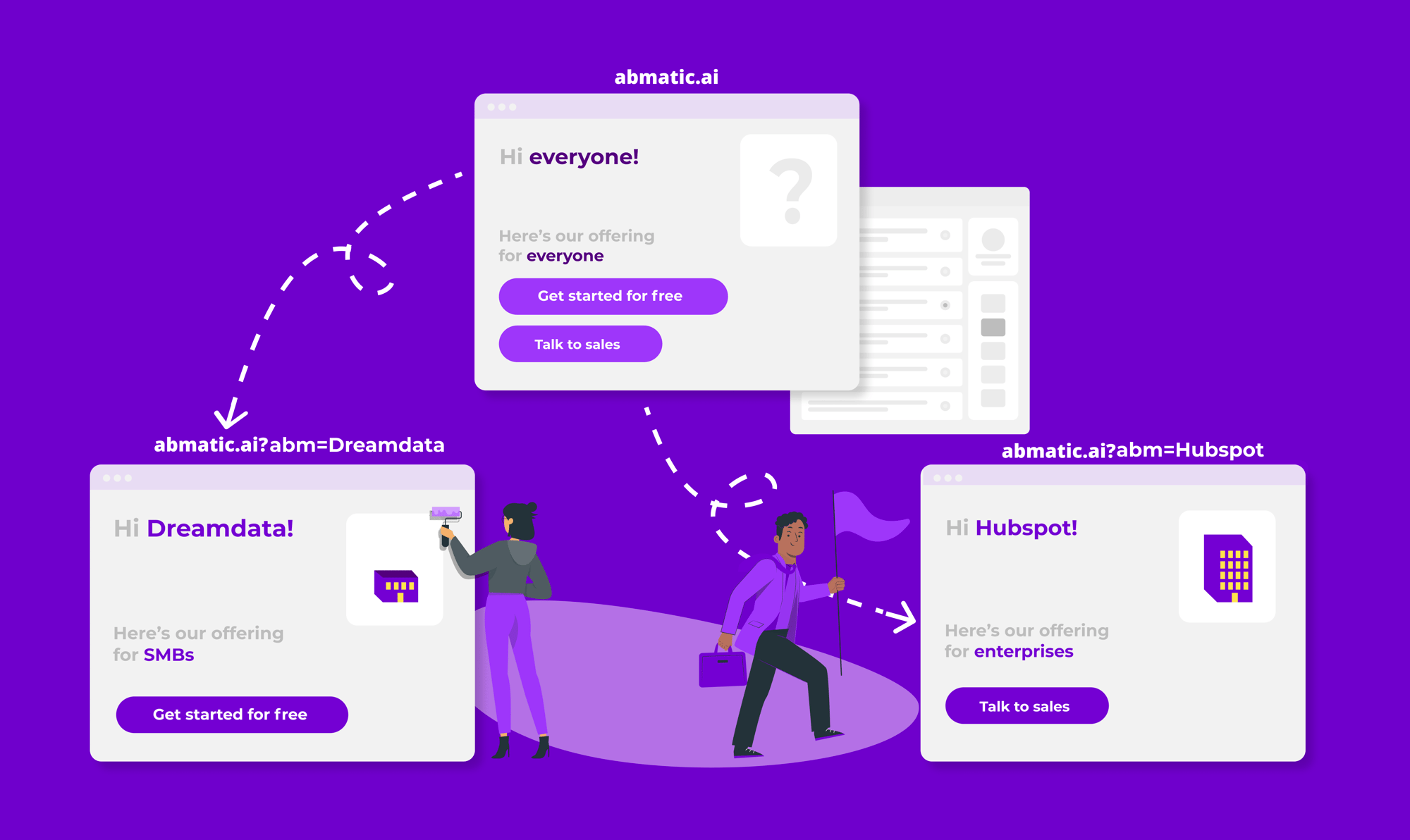
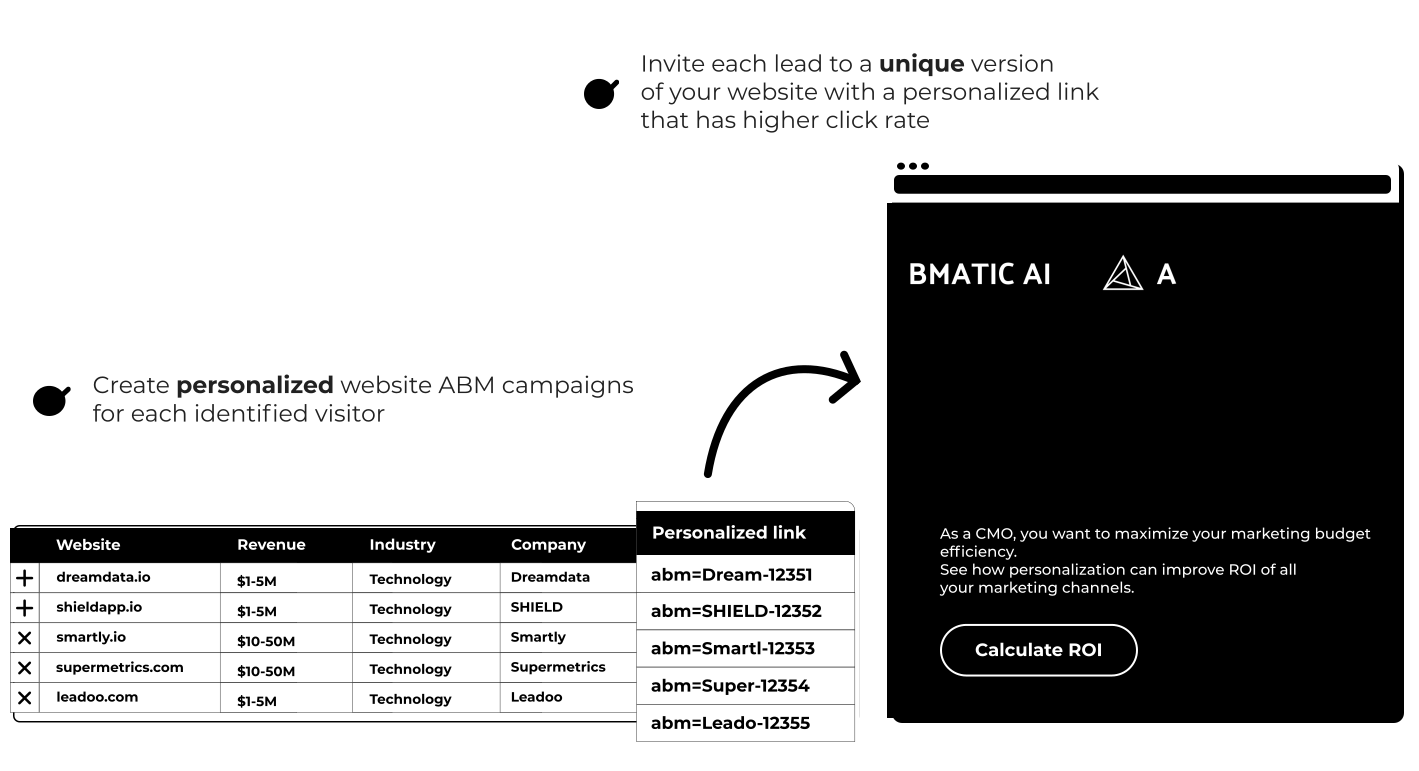
- Website personalization. Tailor landing pages and on-site experiences by firmographic, account stage, or intent signal with a visual editor (Mutiny and Intellimize class).
- Account and contact list building. Build target lists from firmographic, technographic, and intent filters against a first-party database (Clay and Apollo class).
- Agentic Workflows. If-X-then-Y autonomous agents that act across the platform, for example: if an account crosses an intent threshold, enroll it in a sequence, show a personalized banner, and alert the account owner.
- Agentic Outbound. Signal-adaptive, persona-aware outbound sequences across email, LinkedIn, and ad retargeting.
- Agentic Chat. Live-site conversational AI that already knows the visitor, their account, and their intent, and routes qualified meetings to the right rep.
- First-party and third-party intent. Captures intent across web, LinkedIn, paid ads, and email into the same identity graph, layered with third-party signal.
Everything syncs bi-directionally with Salesforce and HubSpot (accounts, contacts, deals, lists, and campaigns), plus native Google Ads, LinkedIn Ads, and Meta Ads, so your CRM and ad platforms stay the system of record while Abmatic AI drives the account program.
Account-based marketing by industry
ABM works wherever deals are considered, multi-stakeholder, and worth pursuing by name. Common programs we support:
- Account-based marketing for financial services. Personalize for banks, insurers, and fintech buyers with compliance-aware messaging and named-account targeting.
- Account-based marketing for healthcare. Reach health systems, payers, and medtech accounts with role-aware experiences for clinical, procurement, and executive stakeholders.
- Account-based marketing for manufacturing. Target long-cycle industrial and B2B manufacturing accounts and adapt content to the buying committee and pipeline stage.
Who account-based marketing is for
Abmatic AI is built for mid-market and enterprise B2B teams, typically marketing and RevOps teams of 3 to 25-plus people at companies from 200 to 10,000-plus employees. The platform handles tier-1 (1:1), tier-2 (1:few), and broad-based (1:many) programs from 50 to 50,000-plus target accounts. Pricing starts at $36,000 per year, with enterprise tiers available, and time-to-value is days, not months: the pixel and first-party signal capture go live the same day you install.
Frequently asked questions
What is the difference between ABM and demand generation?
Demand generation casts a wide net to capture any interested buyer, then qualifies them down. ABM starts from a named list of high-value accounts and concentrates personalization, advertising, and outreach on those companies. Most mid-market and enterprise teams run both, using Abmatic AI to layer an account-based motion on top of inbound demand.
Does account-based marketing work with HubSpot and Salesforce?
Yes. Abmatic AI syncs bi-directionally with both HubSpot and Salesforce, including companies, contacts, deals, lists, and campaigns, so your CRM stays the source of truth while Abmatic AI runs deanonymization, personalization, advertising, and outreach against your target accounts.
How does Abmatic AI identify which accounts visit my website?
Abmatic AI deanonymizes website traffic at both the account level (which company is visiting) and the contact level (which individual person), natively, without requiring a separate tool like RB2B or Clearbit Reveal. Those signals feed the same identity graph that powers personalization, intent scoring, and outbound.
How much does account-based marketing software cost?
Abmatic AI starts at $36,000 per year, with enterprise tiers available on request. Because it replaces 8 to 12 separate point tools, most teams consolidate spend rather than add to it.
How long does it take to launch an ABM program?
Days, not months. The Abmatic AI pixel and first-party signal capture are live the same day you install, and most teams ship their first personalized account experiences within the first week.
See account-based marketing run on your own target accounts.
Book a demo